High‑efficiency photovoltaic self‑consumption for a refrigerated logistics platform
The decarbonization of large refrigerated logistics centers has become a priority to reduce energy costs, increase competitiveness, and move toward more sustainable operational models. However, the deployment of photovoltaic systems on industrial rooftops presents specific technical challenges. In addition to maximizing renewable generation, it is essential to ensure the preservation of the roof and maintain its waterproofing conditions over the long term.
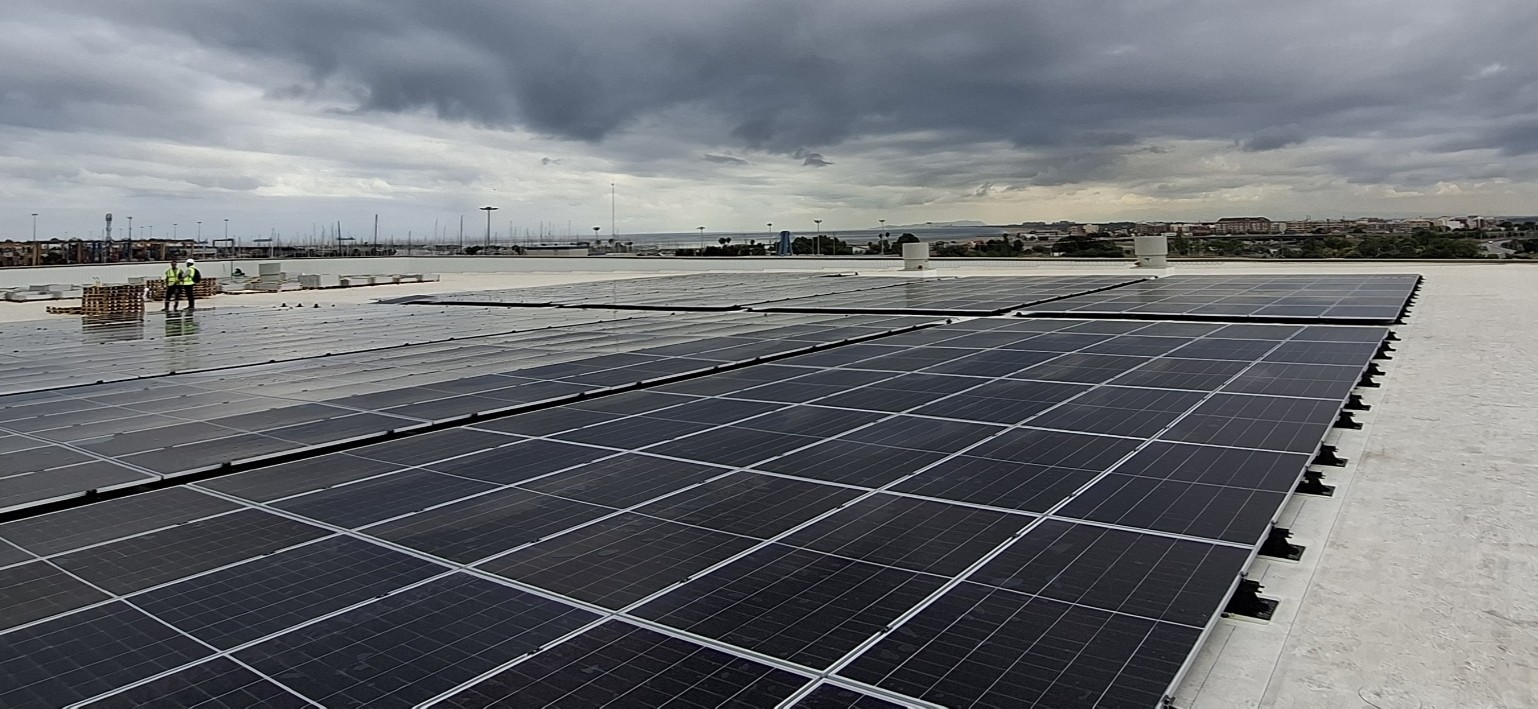
To address this challenge, GDES Efficiency developed a high‑capacity photovoltaic self‑consumption solution for a logistics platform located in a strategic area within the Port of Valencia.
Implemented Solution
The project includes a photovoltaic installation with 3,444.42 kWp of installed capacity, designed to maximize energy production and adapt to the operational needs of the facility.
The solution incorporates 5,838 N‑type monocrystalline modules distributed across approximately 21,987 m² of rooftop surface, using an East‑West configuration that optimizes the use of available space.
One of the project’s distinguishing features is the selected mounting system, based on an anodized aluminum structure with mechanical plots on a TPO roof.
Main Actions
- Design and installation of a photovoltaic self‑consumption plant with zero export of surplus energy.
- Integration of 5,838 N‑type monocrystalline modules.
- Implementation of a support structure adapted to the characteristics of the roof.
- Mounting system designed to minimize mechanical stress and absorb thermal expansion.
- Execution under strict quality and safety standards.
Approach and Execution
The technical complexity of an installation of this scale requires detailed planning and thorough control throughout all project phases.
To achieve this, GDES Efficiency applies specific procedures for assembly, supervision, and quality control, supported by teams specialized in working at height and electrical risk. This approach ensures the reliability of the installation and preserves the integrity of the roof throughout its entire service life.
Results and Benefits
The implemented solution provides both energy and operational benefits:
- Generation of renewable energy for self‑consumption.
- Reduced dependence on external energy sources.
- Lower carbon footprint of the facility.
- Preservation of the roof’s waterproofing and durability.
- A solution prepared for future dismantling without affecting the original conditions of the infrastructure.
- Increased sustainability and energy resilience of the logistics operation.
Conclusion
Integrating photovoltaic solutions tailored to the specific characteristics of each facility enables the logistics sector to accelerate its energy transition without compromising the safety or durability of existing infrastructure.
This project demonstrates how the right combination of design, engineering, and execution can maximize the use of solar energy and generate long‑term value for industrial and logistics operations.