Enresa wins the Aslan Awards thanks to SPOT robotic technology developed by Alisys and GDES
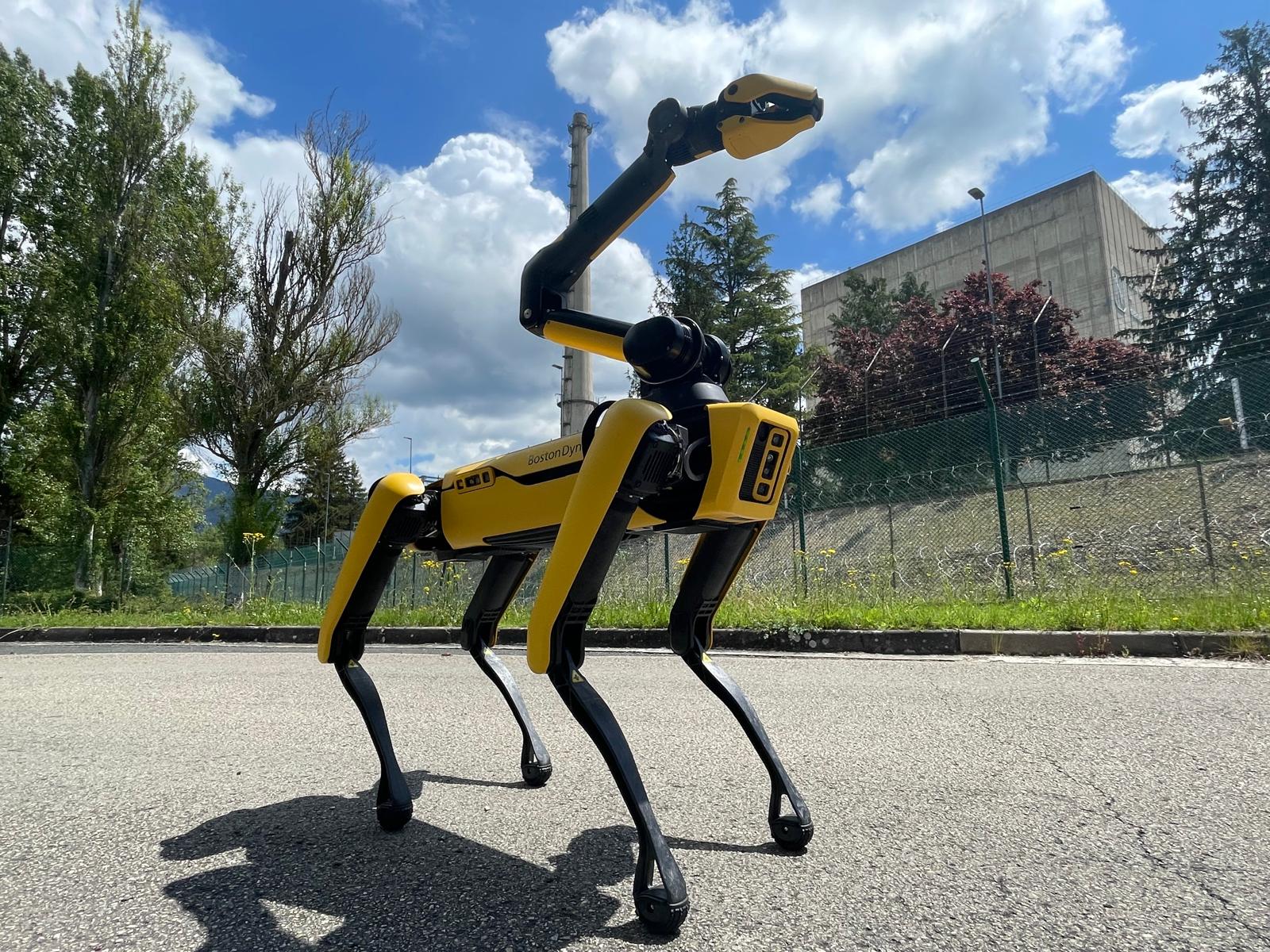
Enresa has won the Aslan Awards 2026 for its commitment to robotics in nuclear decommissioning, with a quadruped robot designed for radiological characterization in nuclear facilities, developed and deployed by the Alisys–GDES joint venture as part of the Decommissioning and Dismantling Plan for the Santa María de Garoña Nuclear Power Plant.
At GDES, we have contributed, together with Alisys Robotics, to the development of this pioneering project led by ENRESA, recognized as a winner at the ASLAN Awards, representing a significant step forward in radiological characterization in complex environments. The award was received by Inmaculada López, ENRESA’s Director of Engineering, at the ASLAN ceremony held on March 17.
This project is part of the Decommissioning and Dismantling Plan (PDC) for the Santa María de Garoña Nuclear Power Plant, where an autonomous robotic solution has been deployed to carry out the characterization of materials, surfaces and floors.
Autonomous technology for safer and more efficient characterization
The solution developed by the Alisys–GDES joint venture is based on a state-of-the-art quadruped robot equipped with a high-precision robotic arm and radiological sensors—both spectrometric and non-spectrometric—enabling automated and accurate measurements.
The system can operate autonomously in complex industrial environments, access hard-to-reach areas and accurately identify contaminated zones. It also integrates advanced technologies such as 3D LIDAR, obstacle detection and marking tools, along with a remote management platform that allows operators to monitor operations, manage data and generate customized reports.
Innovation driving safety and process optimization
This solution enables ENRESA to optimize radiological characterization processes, improve the identification of non-contaminated areas and facilitate the management of radioactive waste destined for the El Cabril storage facility.
It also reinforces the ALARA principle (As Low As Reasonably Achievable), reducing personnel exposure and enhancing safety during decommissioning activities.
Key benefits include:
-
Reduced time in measurement campaigns and data processing
-
Improved operational safety by minimizing direct human intervention
-
Increased accuracy, repeatability and traceability of measurements
-
Remote operation and supervision capabilities, enabling scalability
A project driving sector transformation
The project has covered all phases, from requirements definition to development, validation and commissioning, including training of ENRESA personnel.
With this initiative, ENRESA reinforces its commitment to innovation and continuous improvement in the safe management of radioactive waste. At GDES, we are proud to have contributed to this award-winning project, which demonstrates the potential of robotics and digitalization to transform demanding industrial environments.